Four Basic Types of Mosques in Islamic History and Culture

Mosques are major cultural and architectural landmarks in Islam, as well as places of worship. Various styles and types of mosques have emerged over the centuries. However, It reflects the rich diversity within Islamic history and culture. In this article, we will explore the four basic types of mosques that have played significant roles in shaping Islamic architecture and religious practice.
The Hypostyle Mosque
One of the earliest and most identifiable types of Islamic architecture is the hypostyle mosque. Its name is derived from the Greek term hypostyle, which means a hall with columns. A spacious courtyard surrounds a columned prayer hall in these mosques. The Great Mosque of Kairouan in Tunisia, is the most notable example.
Architectural Features
- A flat roof supported by columns in rows.
- A spacious courtyard for collective prayers.
- The direction of Mecca is shown by a qibla wall.
Significance
The visual and structural rules for Islamic architecture were established by hypostyle mosques. However, they laid the groundwork for the construction of larger, more ornate mosques. In addition, Hypostyle mosques represent Islamic history and culture.
The Ottoman Mosque
The Ottoman Empire is famous for its magnificent and enormous mosques, each with its architectural style. These mosques bear witness to the architectural and cultural legacy of the empire. The Sultan Ahmed Mosque in Istanbul, also known as the Blue Mosque, is a well-known example.
Architectural Characteristics
- Smaller domes and semi-domes surround a central dome.
- Beautiful tile work, calligraphy, and decorating.
- A big prayer hall with ample patio space.
Significance
Ottoman mosques are symbols of the empire's grandeur and opulence. Ottoman mosques represent Islamic history and culture. They mix Islamic design principles with distinctive Turkish characteristics. However, to create a famous architectural style that has influenced numerous mosques throughout the world.
The Contemporary Mosque
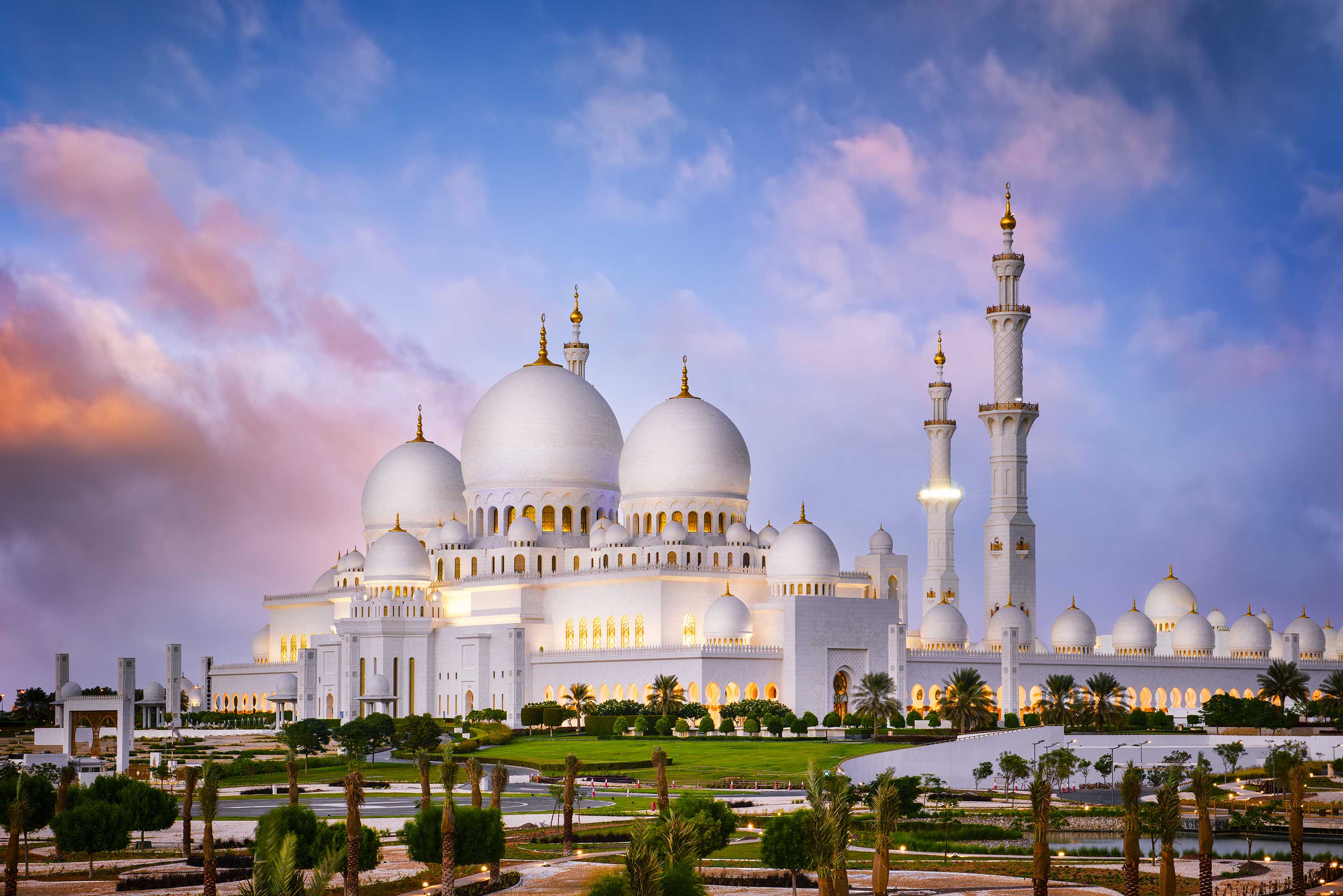
The architectural landscape of mosques has altered with the modern period. To meet the demands of a growing and diversified Muslim community. As well as modern mosques combine new designs, materials, and technologies. The Sheikh Zayed Grand Mosque in Abu Dhabi, the largest mosque in the UAE, is a prominent example of this trend. Contemporary mosques represent Islamic history and culture as well.
Architectural Feature
- Glass, steel, and inventive lighting are examples of modern design components.
- A huge capacity for worshippers.
- Features that are environmentally friendly and sustainable.
Significance
Contemporary mosques demonstrate Islamic architecture's flexibility to changing eras and circumstances. They demonstrate a synthesis of history and modernity, to provide modern comforts while conserving the essence of a sacred space.
Four Basic Types of Mosques on Other Words
Mosques are not simply locations of worship inside the Islamic globe. However, they are architectural wonders, reflecting the various cultures and effects of the areas they may be positioned. We will delve into the four simple kinds of mosques that have developed. However, each represents a unique combo of history, way of life, and architectural beauty. These four sorts are the 'Arabic type,' 'Persian type,' 'Turkish type,' and 'Indian type.'
1. The Arabic Type Mosque
The 'Arabic-kind' mosque is the maximum essential and broadly diagnosed architectural style in the Islamic world. It is deeply rooted inside the records of the Arabian Peninsula and the teachings of Prophet Muhammad. The first mosque ever constructed, the Prophet's Mosque in Medina, is a integral example of this type. Arabic-kind mosques substantially constitute Islamic history and subculture.
Architectural Characteristics
- Design that is both simple and functional.
- A central prayer hall with a qibla wall showing Mecca's direction.
- Minimal decoration, focusing on functionality and spirituality.
Significance
The 'Arabic-type' mosque is the model for Islamic houses of worship. Moreover, emphasizes the simplicity and humility of prayer areas. It has served as a model for mosque construction around the world. However, it is intimately identified with Islamic basic principles.
2. The Persian Type Mosque
The 'Persian-style' mosque is based on Persia's architectural legacy and complex artistic traditions. It rose to prominence in Persia during the reign of the Safavid Dynasty. The Sheikh Lotfollah Mosque in Isfahan, Iran, is an outstanding example of this architecture.
Architectural Characteristics
- Experiment with tile work, calligraphy, and decorative themes.
- The design centered on a dome with elaborate geometric motifs.
- Gardens and fountains embellish the courtyards.
Significance
The 'Persian type' mosque is an artistic masterpiece that combines Persian art and Islamic architecture. Its elaborate motifs and decorative decorations provide witness to the region's rich cultural history.
3. The Turkish Type Mosque
The 'Turkish type' mosque is distinguished by Ottoman Empire architectural influences. However, they are noted for their vast and imposing constructions. The Sultan Ahmed Mosque in Istanbul, also known as the Blue Mosque, is a prime example of this architecture.
Architectural Characteristics
- Smaller domes and semi-domes surround the central domes.
- Marble and ornamental tiles are used extensively.
- Minarets that are tall and slender, with distinctive designs.
Significance
The 'Turkish type' mosque displays the Ottoman Empire's wealth and majesty. Its architectural style blends Islamic ideas with specific Turkish characteristics. Additionally, it creates a lasting imprint on the architectural environment.
4. The Indian Type Mosque
The 'Indian type' mosque evolved in the Indian subcontinent. However, Persian and Indian architectural features were combined. The Badshahi Masjid in Lahore, Pakistan, is a renowned example of this style.
Architectural Characteristics
- Floating domes and magnificent minarets.
- Calligraphy and decorative flourishes complement the intricate marble inlay work.
- Large prayer halls with intricately carved mihrabs.
Significance
The 'Indian kind' mosque is a cultural aggregate of Persian and Indian effects that results in architectural beauty. Its use of white marble and ornamental decorations left an indelible mark on Islamic artwork and history.
These four basic types of mosques are the 'Arabic kind,' 'Persian type,' 'Turkish type,' and 'Indian type. However, These 4 primary styles of mosques aren't only the best places of worship but also symbols of cultural variety and architectural excellence inside the Islamic global. These 4 simple varieties of mosques affect the Islamic records and traditions of the vicinity. However, it turned into construction and contributed to the rich tapestry of Islamic structure. Whether it's the simplicity of the 'Arabic type,' the intricacy of the 'Persian type. Moreover, the grandeur of the 'Turkish kind,' or the fusion of the 'Indian type. However, these mosques continue to encourage and captivate humans from around the sector. However, it showcases the unity and diversity of the Islamic faith.
Recent Posts

10 Top Mosques, You must visit in Canada
10 Top Mosques to Visit in the United Kingdom

Best 10 Mosques in USA

Top 10 Beautiful Mosques of the UAE

Some Common Misconceptions About Mosques and Islam

Explore the Essential Etiquette Tips for Visiting a Mosque
Discover How Many Mosques are Included in the Holy Quran

FAQs Sessions Guide for Non-Muslims Before Visiting a Mosque